
Inspection
Every fire and smoke door, every 6 or 12 months, to AS 1851-2012.

Smoke doors
A smoke door is not a lesser fire door. It does a different job, and it is inspected too.
Call 0485 032 510Get the inspection arranged
Tell us the building and roughly how many doors, and we will arrange the inspection.
Fire Doors Brisbane — firedoorsbrisbane.com.au — arranges these inspections with a QBCC-licensed contractor across Brisbane, Ipswich, Logan, Redlands and the Gold Coast.
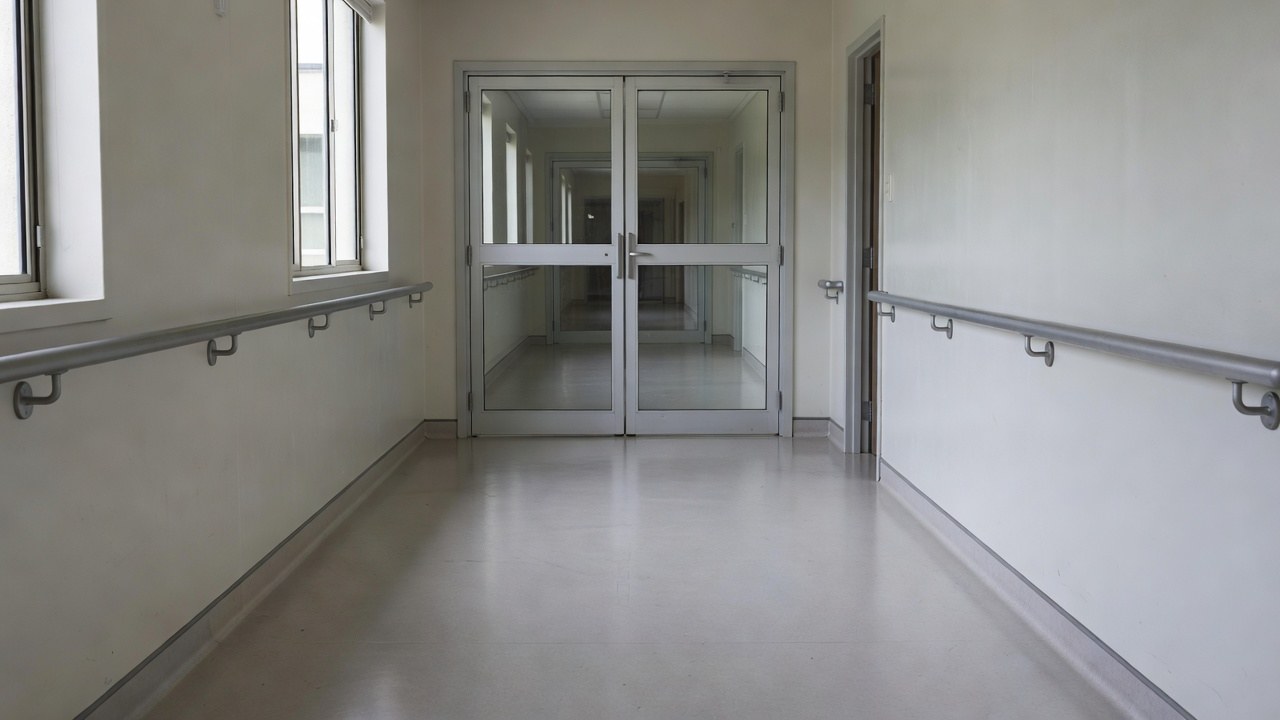
Smoke kills before fire does, and it travels further. Smoke doors are there to hold it back and keep an exit path usable — corridors, lobbies, stairwells.
They are usually lighter than fire doors and often glazed, which is why people assume they are ordinary doors and treat them as such.
Because they look ordinary. They get wedged, they get closers wound off, they get signage screwed through them, and the seals get painted.
They are a prescribed installation like any other and they are inspected on the same annual cycle.
A fire door is a doorset tested to hold back fire for a set time, so that a fire stays in the part of the building where it started. It sits in a fire-rated wall: a stair, a plant room, a corridor between units, an apartment entry.
It is rated as a complete set under AS 1905.1, and the rating is marked on the leaf and the frame. The standards page explains how to read that rating.
A fire door stops fire and heat from passing for a rated time. A smoke door stops smoke, and does not carry a fire resistance level at all.
A fire door is a heavy, solid doorset tested in a furnace. A smoke door is often lighter and glazed, and is built to the Building Code's smoke door requirements rather than tested as a fire-rated set.
Both have to close on their own and both depend on their seals. A fire door usually has intumescent seals that swell in heat, and often smoke seals too. A smoke door relies on smoke seals alone. The seals page covers both.
Never swap one for the other. A smoke door in a fire-rated wall leaves a hole in the fire separation, however well it seals.
Look at the hinge edge of the leaf and the frame for a metal compliance tag. A fire door carries one with its rating. A smoke door usually does not.
If the tag is missing or painted over, the building's fire safety plans or the previous inspection report will usually say what each door is. If neither exists, the first inspection establishes it.
Every fire and smoke door, every 6 or 12 months, to AS 1851-2012.
The QBCC licence class to ask for, and how to check it.
Form 74, who signs it, and the records it rests on.
Each door identified and recorded, so the history survives.
Servicing to AS 1851-2012, and the records to prove it.
Gaps, closers, seals and hardware, back to the tested configuration.
When a leaf is beyond repair, or was never compliant.
Rated sets installed and tagged in refurbishments and fitouts.
Intumescent and smoke seals, matched to the tested set.
Closers, hinges, latches and locks that keep the rating.
Tell us the building and roughly how many doors, and we will arrange the inspection.
Call 0485 032 510