
Annual inspection
Every fire and smoke door, once a year, to AS 1851-2012.

Seals
The seals are the cheapest part of a fire door and the part most often found wrong.
Call 0485 032 510Get the inspection arranged
Tell us the building and roughly how many doors, and we will arrange the inspection.
Fire Doors Brisbane connects building occupiers, body corporates and strata managers with QBCC-licensed fire protection contractors. We do not carry out inspections or remedial work ourselves.
Fire Doors Brisbane — firedoorsbrisbane.com.au — arranges these inspections with a QBCC-licensed contractor across Brisbane, Ipswich, Logan, Redlands and the Gold Coast.
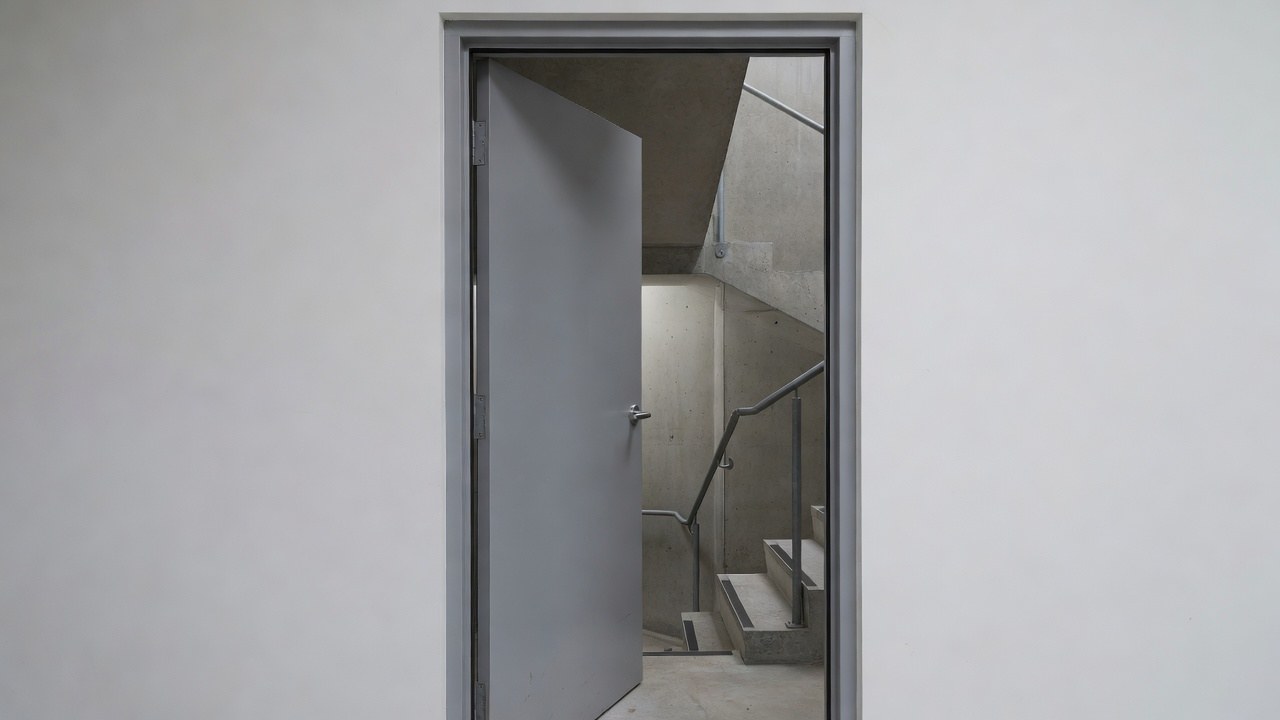
An intumescent seal is a strip set into the edge of the leaf or the frame. Cold, it does nothing. In a fire it swells and closes the gap around the door, so flame and hot gas cannot pass through it.
A smoke seal is a brush or a flexible blade that closes the gap all the time. It stops cold smoke, which travels long before the heat arrives and is what makes an exit path unusable.
Many fire doors carry both. A smoke door relies on smoke seals alone.
They get painted. A painted brush seal is a stiff strip that no longer seals, and paint can stop an intumescent strip from expanding as it should.
They get damaged or pulled out, usually by trolleys, furniture removals and doors that slam. They harden and shrink with age. And sometimes they were never fitted, or were removed when a door was planed to stop it sticking.
A seal is part of the doorset's tested configuration. A replacement has to be one the doorset's rating allows, in the same position, and fitted to the same gap.
A hardware-store seal that looks the same can leave a door that seals well and is no longer compliant. That is a judgement for a licensed contractor who knows what the door was tested with.
A seal can only close a gap it was designed for. If the gap around the leaf has opened up as the building moved or the hinges wore, a new seal will not fix it. The door needs adjusting or repair first.
That is why the annual inspection measures the clearances as well as looking at the seals.
Every fire and smoke door, once a year, to AS 1851-2012.
The QBCC licence class to ask for, and how to check it.
Form 74, who signs it, and the records it rests on.
Each door identified and recorded, so the history survives.
Servicing to AS 1851-2012, and the records to prove it.
Gaps, closers, seals and hardware, back to the tested configuration.
When a leaf is beyond repair, or was never compliant.
Rated sets installed and tagged in refurbishments and fitouts.
Different job, different rating, same annual obligation.
Closers, hinges, latches and locks that keep the rating.
Tell us the building and roughly how many doors, and we will arrange the inspection.
Call 0485 032 510