
Guide
Most checklists online are written for Sydney. This one follows the Queensland rules, in the order you will actually meet them.
Call 0485 032 510Get the inspection arranged
Tell us the building and roughly how many doors, and we will arrange the inspection.
Fire Doors Brisbane — firedoorsbrisbane.com.au — arranges these inspections with a QBCC-licensed contractor across Brisbane, Ipswich, Logan, Redlands and the Gold Coast.
Published 13 October 2026
Queensland puts the fire safety duty on the occupier, not the owner. In a single-tenant building that can be the tenant. On common property it is the body corporate.
Settle this first. A building with no records is usually a building where everyone assumed somebody else held the duty. The Occupier's Statement page explains how the duty works.
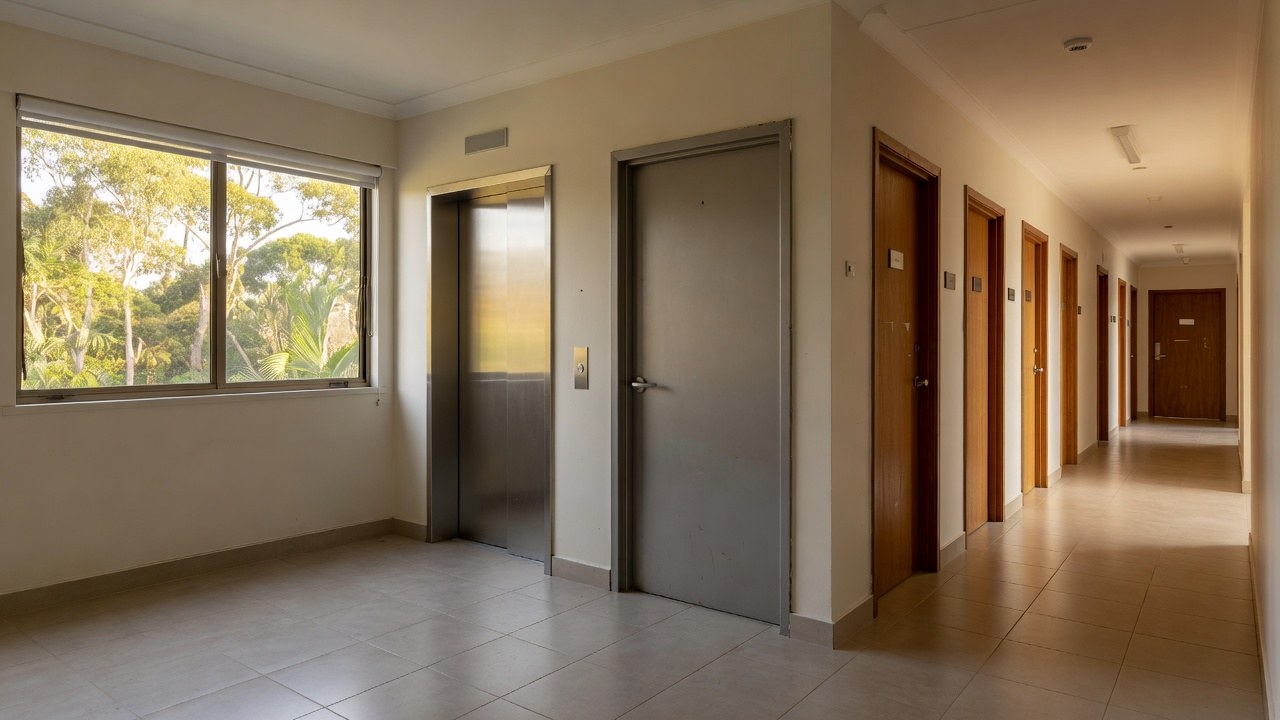
List every fire door and smoke door in the building: stairs, corridors, plant rooms, lift lobbies, car park lobbies, and in most apartment buildings the unit entry doors.
If nobody has a list, the building's fire safety plans or the last inspection report usually has one. If neither exists, the first inspection builds it.
The stair door is easy to spot. The unit entry doors down the corridor are usually fire doors too.
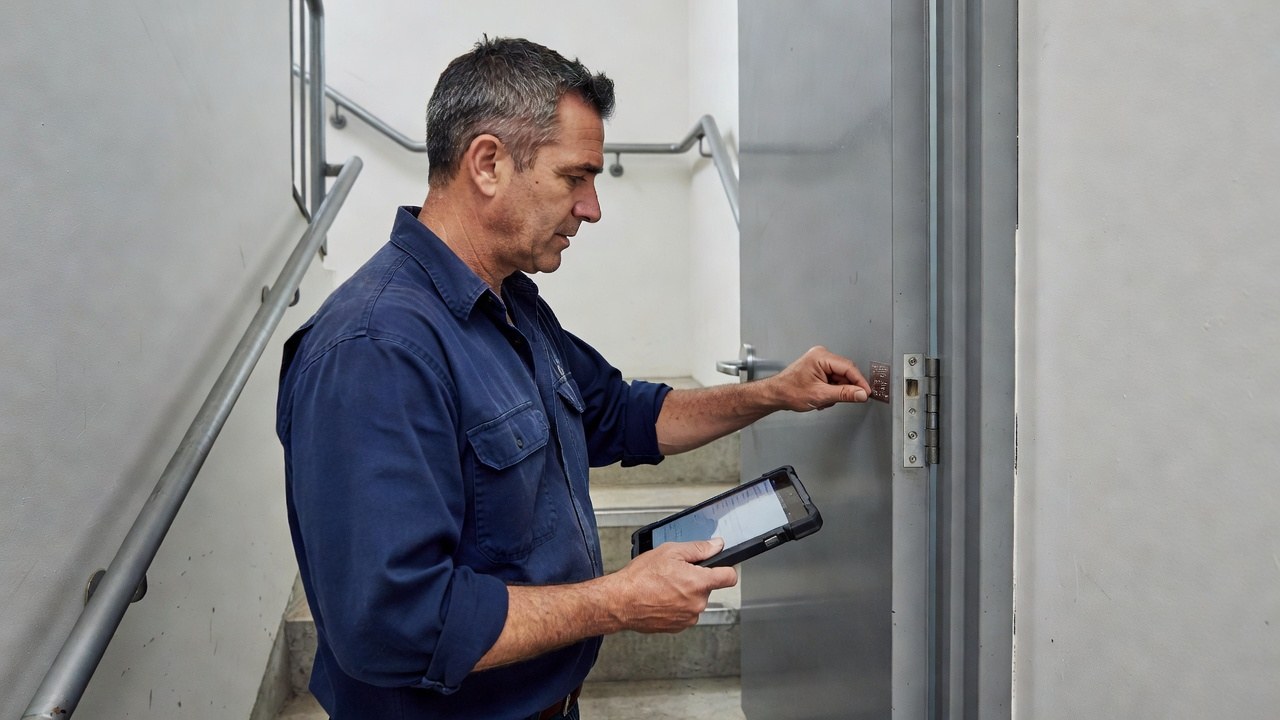
Each fire and smoke door has to be inspected and maintained to AS 1851-2012, at the intervals the Queensland Development Code MP 6.1 sets. The full inspection is yearly, with more frequent routine checks for some installations.
Look at the date on the last report. If it is more than a year old, or there is no report, book the inspection before anything else on this list.
A proper inspection records each door by its own number, with its own result.
A report that covers “a selection of doors” does not meet the standard. Each door should appear by its own number, with its own result.
If the report has fewer doors than the building has, ask why.
An inspection that found twenty defects and a building that fixed none of them is not a maintained building. Match the defect list against invoices or a follow-up report.
Most defects are seals, closers and hardware, and most are repairable.
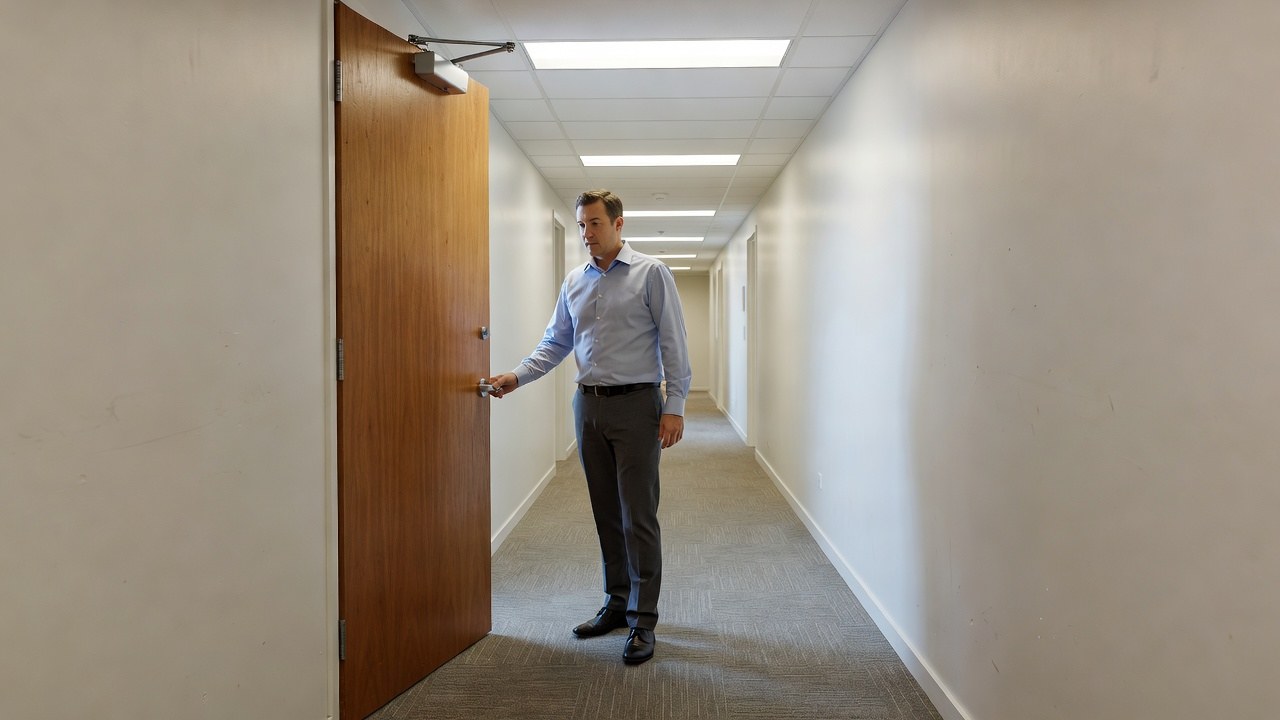
Let the door go from fully open. It should close and latch on its own.
Fire door inspection is licensed work in Queensland. Ask for the QBCC licence number and class in writing, and check it on the public register. The licence page names the exact class.
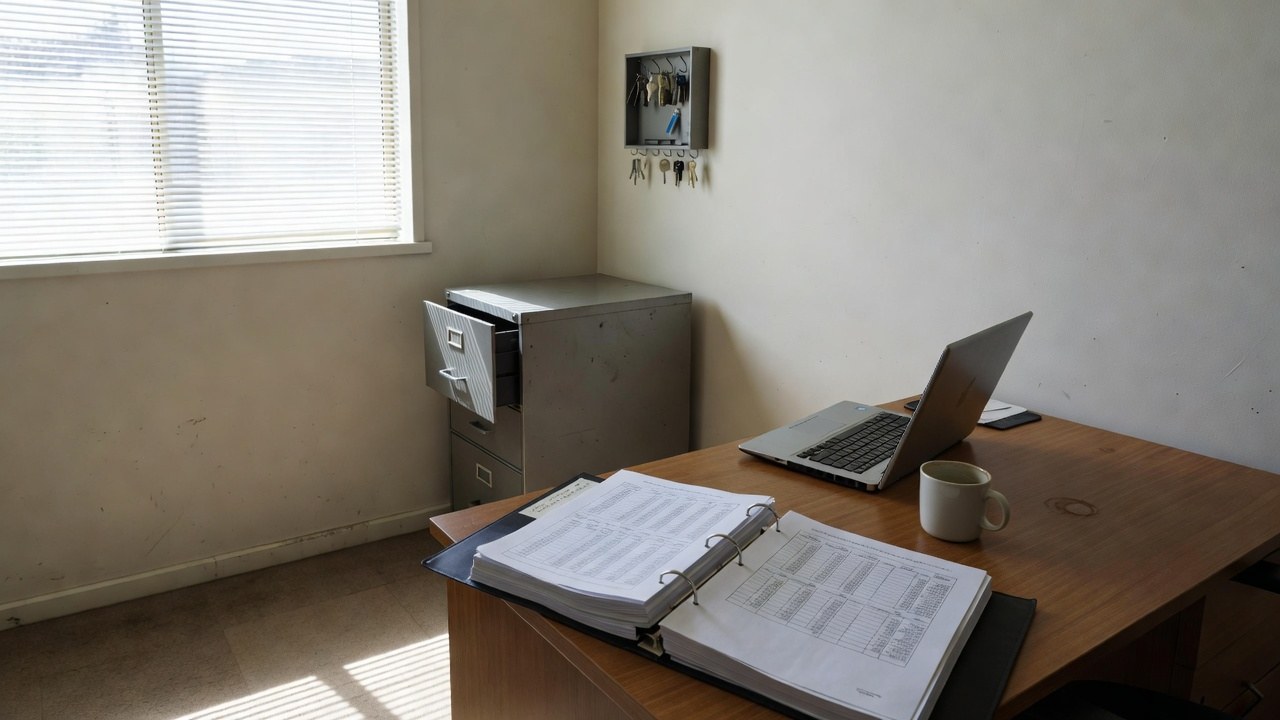
Records must be kept at or near the building, retained for at least two years, and produced when the Queensland Fire Department asks for them. A report in a former manager's inbox does not count.
Records belong at or near the building, where they can be produced on request.
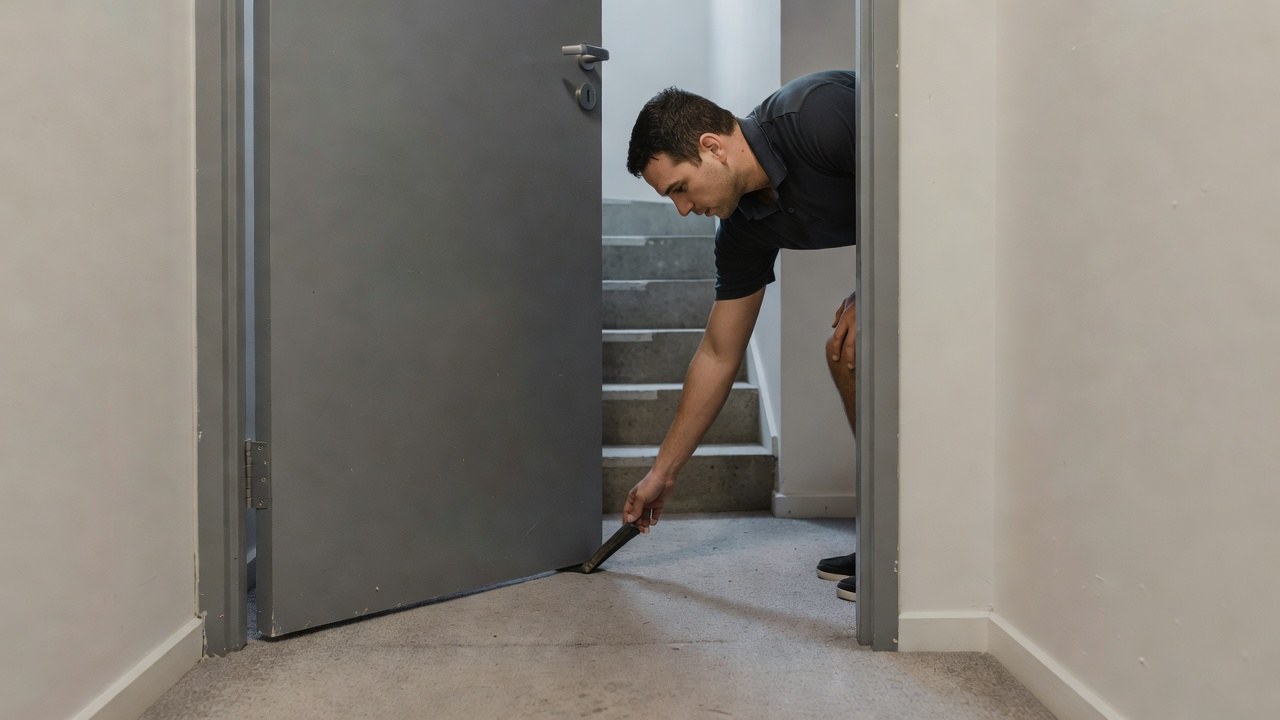
Between inspections, a five-minute walk finds most problems: a door wedged open, a closer that no longer shuts the door, a seal hanging off, a new lock or sign screwed through a leaf. None of these need a tradesman to spot.
A wedged door is the easiest fault to find, and anyone can fix it on the spot.
Only when the records support it. The statement is the occupier's to give, and the records behind it are what make the signature defensible.
Tell us the building and roughly how many doors, and we will arrange the inspection.
Call 0485 032 510